Is White Light Really Blue? The Truth About White LEDs

For a long time, incandescent bulbs were the main source of artificial light in our homes and streets. By heating a filament until it glowed, they produced the warm light that defined everyday lighting for more than a century. Today, however, most everyday lighting relies on LEDs, which are far more energy-efficient and longer-lasting. This change marks one of the most important advances in everyday lighting.
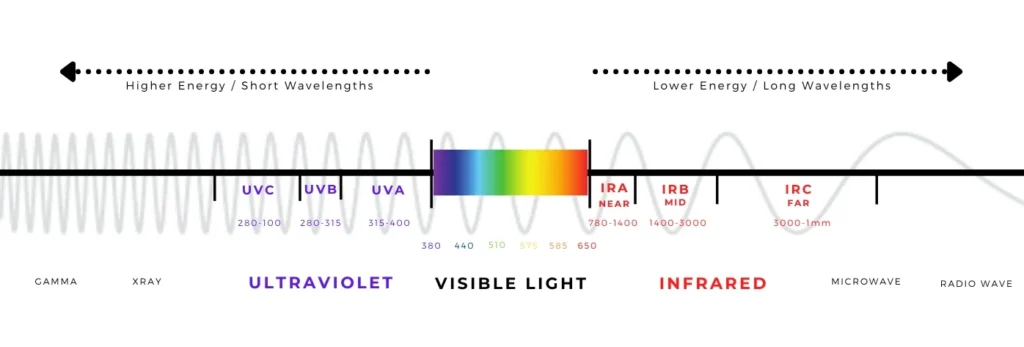
Figure 1. Electromagnetic spectrum. Source: Helathligting.com

First, we need to understand how we perceive colour. Light is part of the electromagnetic spectrum (Figure 1), but our eyes can detect only a small portion of it: visible light. Objects appear coloured because they absorb some wavelengths of light and reflect others into our eyes. In additive colour mixing, combining the three primary colours of light (red, green, and blue) produces white light (Figure 2). Some displays and specialised LED systems work in exactly this way, by carefully mixing red, green, and blue emitters (Figure 3). However, this is usually not how white LEDs for everyday lighting are made, since that approach is more complex and often less efficient for general illumination.
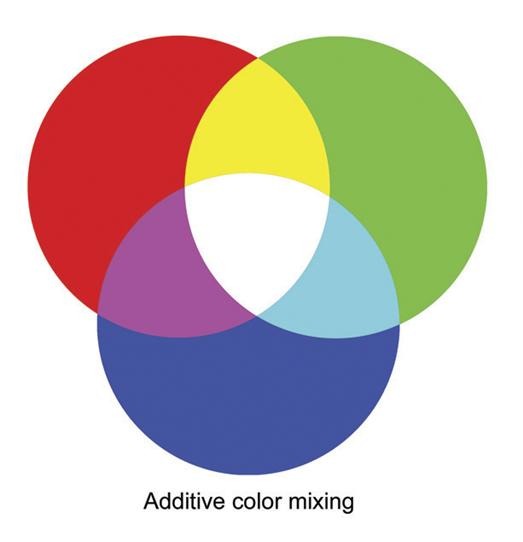
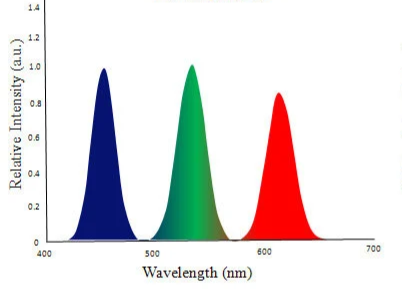
Figure 2. Additive color mixing Source: tvtechnology.com
Figure 3. Trichromatic LED spectra. Source: Sevincer, A., et al. (2013).

Instead, photonics offers a much more elegant mechanism: fluorescence. In simple terms, fluorescence occurs when a material absorbs light of one colour, usually one with higher energy, which means it is closer to the blue end of the spectrum, and then re-emits part of that energy as light of another colour, usually with lower energy, closer to the red end. A familiar example can be seen in fluorescent paints or minerals that glow under ultraviolet light (Figure 4). The key idea is that the material transforms the incoming light into new wavelengths, changing the colour we ultimately perceive.
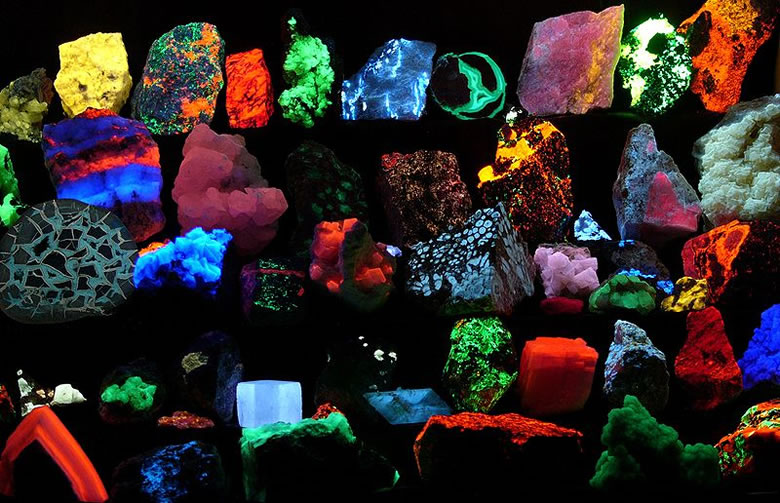
Figure 4. Fluorescent minerals. Source: geology.com

This is exactly the principle behind most white LED bulbs. They are not truly “white” light sources by themselves. In most cases, the heart of the device is actually a blue LED. This blue light then passes through a fluorescent coating, typically made of phosphor materials, which absorbs part of the blue emission and re-emits it at longer wavelengths, especially in the yellow region (Figure 5). The combination of the remaining blue light and the converted yellowish light is perceived by our eyes as white. So, in a sense, many white LEDs are indeed based on blue light, but transformed through fluorescence into something much richer.
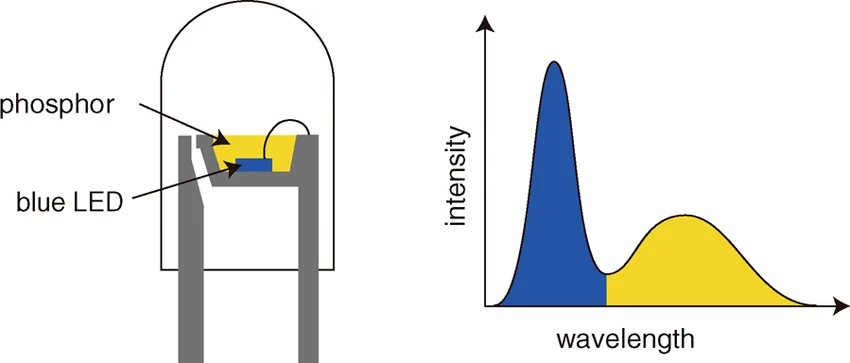
Figure 5. Structure and spectrum of phosphor‐converted white LED. Source: Toh, A. & Yang, L. & Sakiyama, Kazuo & Sugawara, T.. (2019). Fingerprinting Light Emitting Diodes Using Spectrometer. Electronics Letters. 55. 10.1049/el.2019.1908.

In the end, white LEDs are a beautiful example of how modern photonics turns a simple physical effect into a technology that shapes everyday life. What appears to be ordinary white light is actually the result of a clever interaction between a blue semiconductor and fluorescent materials. Rather than a trivial engineering trick, it is a reminder that even the technologies we use every day can be built on fascinating physics.

By: Borja García García

Science and tradition differ in the preparation of good tea

Tea

Ever since Asterix put the leaves given him by a Phoenician merchant into the hot water that the Bretons drank, and until recently, the way for the preparation of good tea has been exclusive to the British.

Asterix in Britain

Traditional preparation of tea

According to Carol, my English teacher, the preparation of a good tea is as follows:

  • Heat water in a kettle. Here you can see how to choose a good kettle.
  • Then, pour some hot water into a mug to warm it up and dispose of it
  • After that, place the tea leaves or tea bag in the cup
  • And finally, pour the hot water into the cup and leave it for a few minutes depending on the type of tea.

Scientific preparation of tea

However, after years of research in the extraction of components from natural products, Dr. Quan Vuong, from the University of Newcastle, in Australia, has concluded that the best way to prepare a good tea is with the use of the microwave and not only that but also adding the tea leaves in the microwave for a few seconds!!!!. According to Dr. Vuong, the way to prepare a good tea would be as follows:

  • Pour some hot water in a cup with the tea leaves or the tea bag.
  • Then, heat in the microwave for about 30 seconds at medium power
  • And finally, leave 1 minute and remove the tea from the cup
Microwave to produce good tea

Despite the fact that Dr. Vuong had already reached this conclusion years ago, until these days it has not been expanded on social networks, due to the television series Broadchurch, where the actor David Tennant making himself tea with the use of a microwave. With the premiere of the episode, numerous complaints and comments flooded social networks, how could you extract a tea in the microwave?

In addition, according to the research of Dr. Vuong, the use of the microwave improves the separation of some of the main components of the flavor of tea such as caffeine, theanine, and some phenolic compounds, up to 80%. In addition, some of these substances such as theanine, or catechin phenolic compounds, or flavonoids, have been shown to have numerous antioxidant effects that are beneficial to health, including cardiovascular diseases and cancer (Vuong, 2014). Thus, the use of the microwave would not only enhance the flavor of the infusion but also the benefits it would bring to our health.

Solid-liquid extraction

In chemical engineering research, one of the main stages for the separation of components of solid materials is through the unit operation of solid-liquid extraction. In this operation, the transfer of the components from the solid to the liquid depends mainly on two mechanisms: (i) the solubility of the substance being extracted and (ii) the diffusion or transport mechanism within the solid and the liquid. The solubility depends fundamentally on the liquid with which it is being extracted and, on the temperature, the higher the temperature, the greater the solubility. However, in the case of tea, the temperature and the liquid almost remain unchanged, so we must improve the diffusion process instead of the solubility process, and it is precisely the diffusion mechanism that can be improved with the use of microwave extraction processes or even through ultrasound processes.

Curiosity

The word leaching, solid-liquid extraction whose objective is to separate components from a solid to a liquid, depending on the application, is sometimes called percolation. In this sense, some of the coffee machines are called percolation machines.

From this perspective, it is believed that the name of the café from the Friends series, Central Perk, is inspired by the double meaning of Central Park and the coffee obtained by percolation.

Conclusion

Forgetting the milk controversy, which can be used for another post, I encourage you to try both methods of preparing a tea at home and decide which is the best for you. The enjoyment of each one can be different.

References

http://metro.co.uk/2017/04/11/researchers-are-claiming-that-microwaving-tea-makes-the-best-brew-6568067/

http://www.independent.co.uk/life-style/health-and-families/heating-cups-tea-microwave-health-benefits-warm-kettle-scientist-dr-quan-vuong-a7678451.html

https://www.indy100.com/article/tea-cup-microwave-brew-pg-tips-yorkshire-twitter-outrage-7678466

http://www.mindfood.com/article/the-best-way-to-make-a-cup-of-tea/

https://www.newcastle.edu.au/profile/vanquan-vuong

  • Vuong, QV. 2014. Epidemiological Evidence Linking Tea Consumption to Human Health: A Review. Critical Reviews in Food Science and Nutrition, 54: 523-536.
  • Vuong QV, Bowyer MC, Roach PD. 2011. L‐Theanine: properties, synthesis and isolation from tea. Journal of the Science of Food and Agriculture, 91(11): 1931-1939.